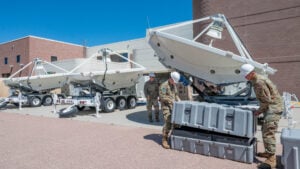
How US military space operators are likely aiding the fight in Iran
While senior officials have offered praise with few details, experts told Breaking Defense space ops likely include jamming or spoofing satellite communications.
While senior officials have offered praise with few details, experts told Breaking Defense space ops likely include jamming or spoofing satellite communications.

'Unsettled' is a polite word for 2025 in the space domain.

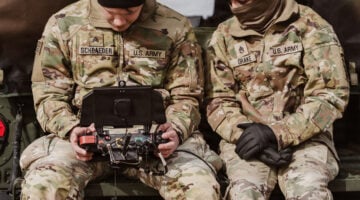
AI, autonomous systems, cyber, and EW converge as industry targets faster battlefield effects.
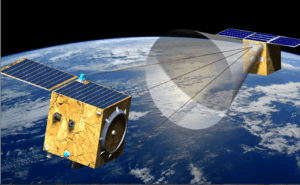
The new strategy calls on German MoD to develop a number of new space-based capabilities, including "effectors" to counter adversary threats on orbit such as agile spaceplanes and "bodyguard" satellites with shoot-back systems.

Increased focus on defense is one of five pillars in a new French national space strategy announced by President Emmanuel Macron today.
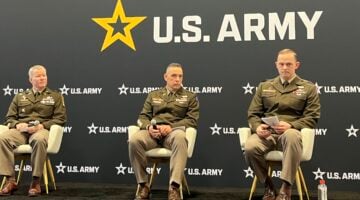
Brig. Gen. Donald Brooks, deputy commander of Army Space and Missile Defense Command (SMDC), said the command's plan to stand up a new Space Branch is now "in the approval process" at the senior service level.

Col. Pete Atkinson argues in this op-ed that the Army needs to have native counterspace capabilities.


As global navies adapt to evolving underwater threats, ASELSAN’s integrated sonar, countermeasure, and sonobuoy solutions offer a scalable, future-ready approach.
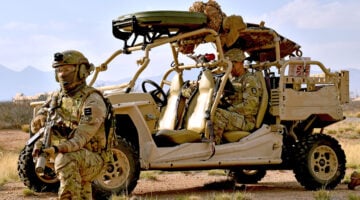
The Army's emphasis currently is "on the counterspace piece for space control, electronic warfare, really doing counter-communications," said Brig. Gen. Donald Brooks, deputy commanding general for operations at Army Space and Missile Defense Command.
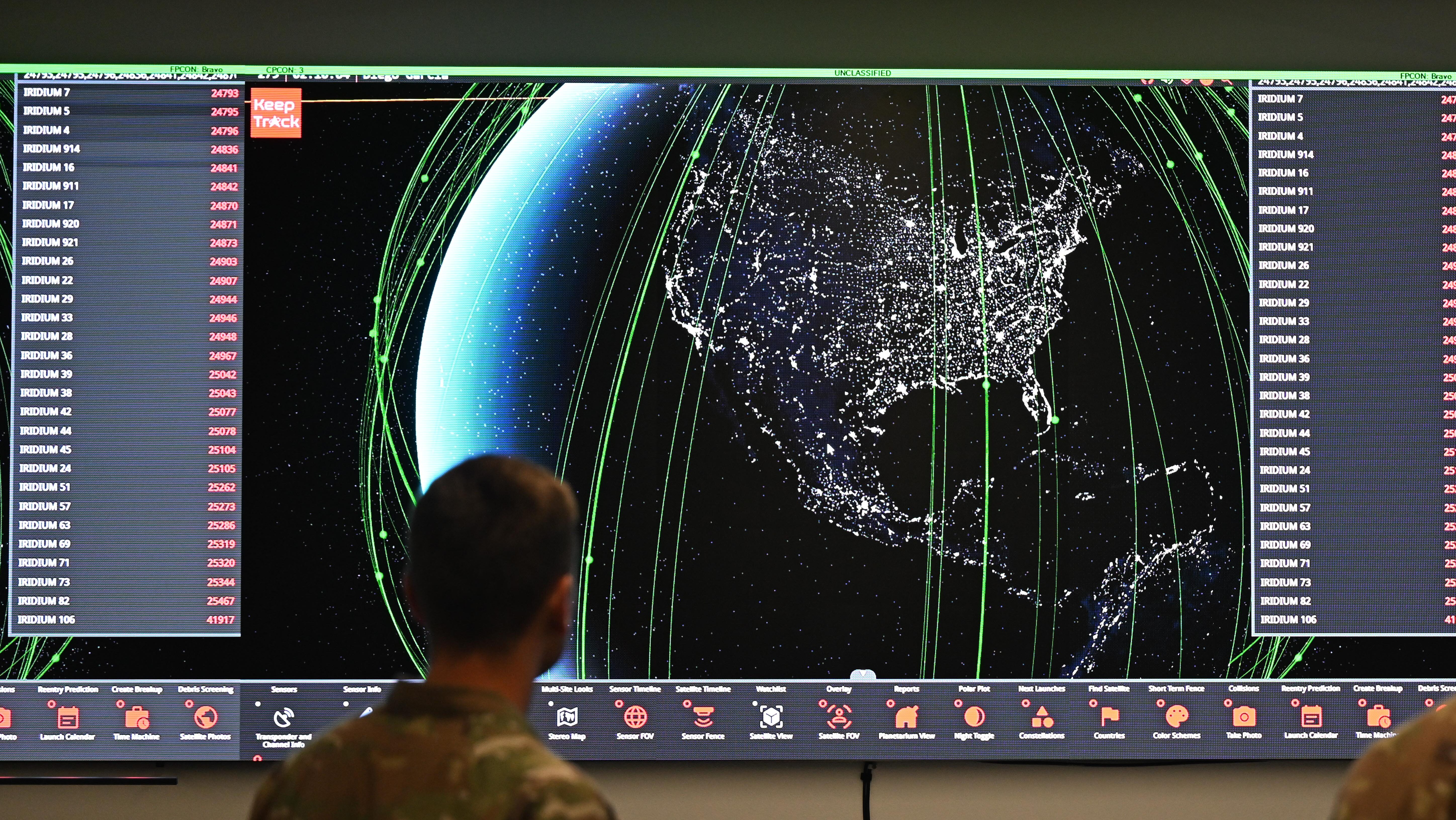
The document argues that the US needs to establish space superiority as a precondition for winning a war, and explains that the Space Force does that by exercising "space control."

The program was designed to both to increase mobility and improve the jamming capabilities of the Space Force's legacy Counter Communications System, to include providing multi-frequency jamming in S-band and X-band.

The report finds that Russia has been increasingly successful at blocking Ukraine's use of SpaceX's Starlink communications constellation, citing media reports in December 2024 about a new system specifically targeting Starlink called Kalinka and developed by the Russian Center for Unmanned Systems and Technologies.
Government can’t stop to update systems, so modernization has to happen without interruptions.

The chief of space operations said the Space Force is examining how to best invest in six categories of counter-space weapons, because China is doing the same.

The AEI paper, authored by Senior Fellow Todd Harrison, recommends ditching the standup of Space Futures Command and creating a new organizational structure that combines acquisition and operational functions around mission areas.
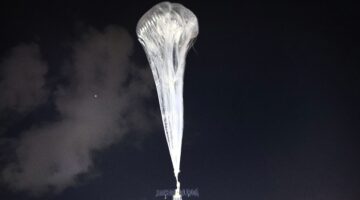
"We'll have multi-form factor balloons operating at various altitudes, executing different mission sets, ultimately increasing the target problem set and dilemma for our adversaries ...," said Col. Donald Brooks, commandant of the Army's Space and Missile Defense Center of Excellence.
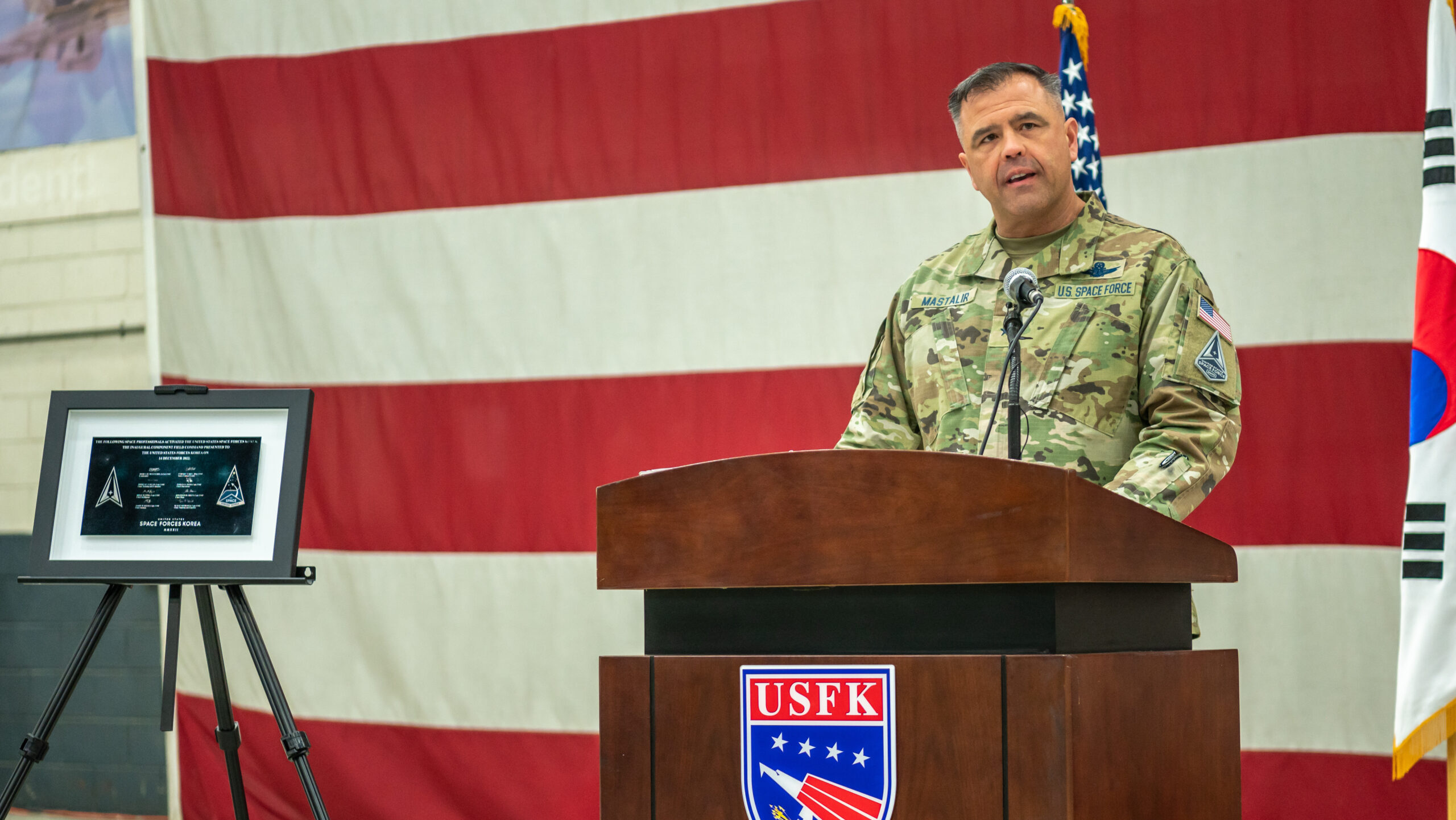
"[T]here's all kinds of excitement, both on the [Korean Peninsula] and in Japan, about what the Space Force can bring those allies," Brig. Gen. Anthony Mastalir, commander of US Space Forces — Indo-Pacific, told the Mitchell Institute today.